22,000 Flee As "Out Of Control" Wildfires Tear Through Canada — And Experts Say It's Only Getting Worse
Canada's federal government has stepped in after unprecedented fast-moving wildfires forced mass evacuations in British Columbia. With 102 fires raging — nearly half categorised as "out of control" — experts warn the province faces weeks of danger ahead.
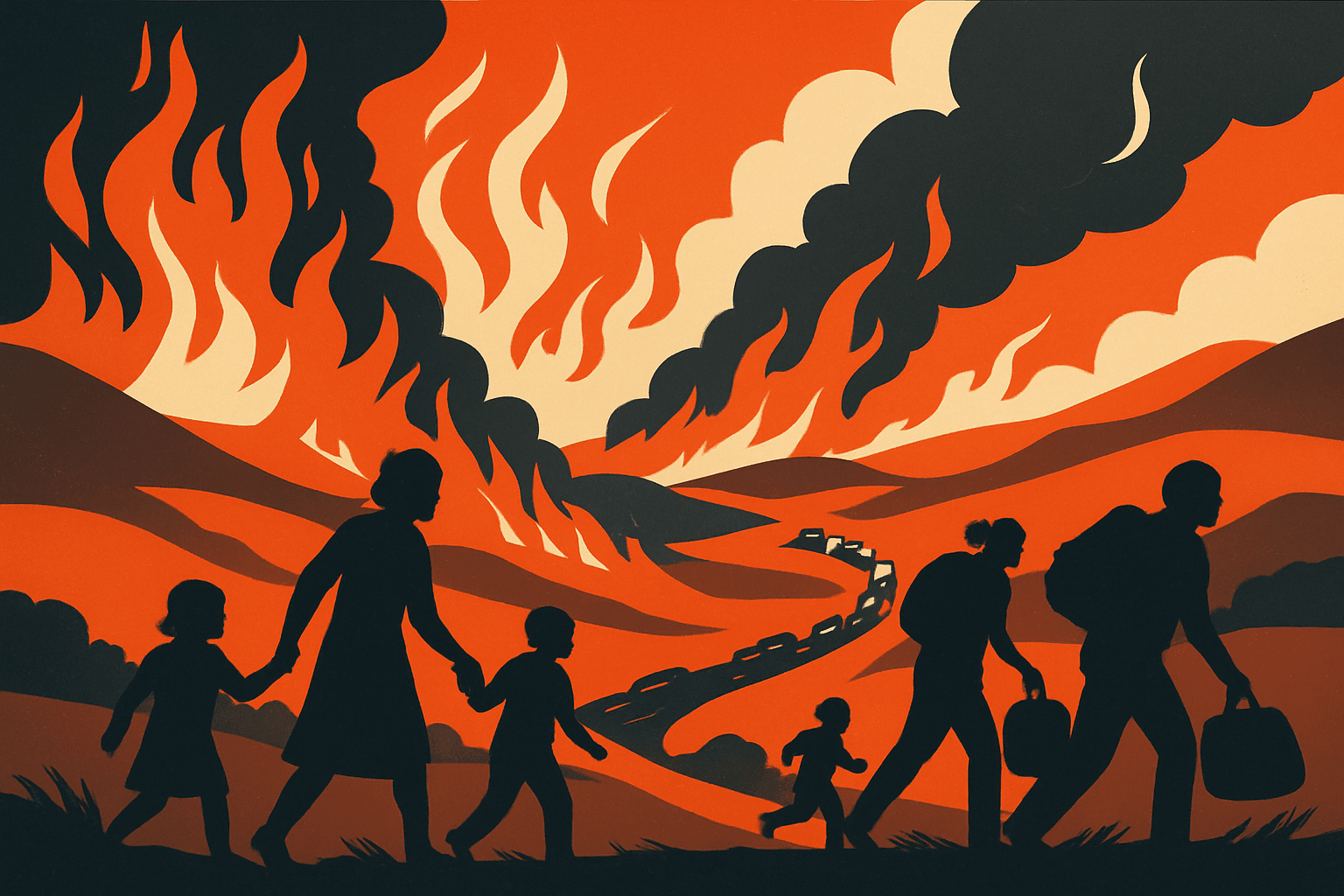
Canada's federal government has announced urgent assistance for British Columbia after an onslaught of unprecedented wildfires forced about 22,000 people to flee their homes in frantic overnight evacuations.
A total of 102 wildfires were raging across the province on Sunday, of which nearly half were categorised as "out of control", according to The Guardian. Of those fires, 78 ignited during the past week alone.
Entire Communities Evacuated Overnight
The entire community of Summerland, about 30 miles southwest of Kelowna and home to about 12,000 people, was evacuated overnight on Saturday, along with a further 8,000 people around nearby Peachland.
About 10,000 others have been told to prepare to evacuate at a moment's notice.
"I approved a request for federal assistance from British Columbia to provide shelter and accommodations for people who have been forced to leave their homes," said Eleanor Olszewski, Canada's minister of emergency management and community resilience, in a social media post on Sunday.
Residents were shaken awake in the middle of the night to flee their homes. Jennifer Pascoa, who lives in Summerland, told the Canadian Broadcasting Corporation that she began packing when she saw flames licking the nearby mountains.
"It happened so quickly. We came home from the beach, we saw the plume of smoke, and then within an hour, the sky was covered in dark, black clouds," she said.
The Fire That Spread "Like A Bomb Going Off"
Efforts to battle the Bald Range wildfire have been hampered by the breakneck speed of its spread.
The blaze was first detected late on Friday evening, and grew within hours to more than 40 square miles — nearly twice the size of Manhattan — as it raced nearly nine miles toward Okanagan Lake.
The province's premier, David Eby, declared a state of emergency late on Saturday, telling reporters that the blaze had been "like a bomb going off."
The British Columbia Wildfire Service deployed 10 standard helicopters and one night-vision helicopter in the response, but they've been hindered by thick smoke, turbulence and the sheer size of the fires.
The Royal Canadian Mounted Police said they were investigating a possible fatality in the fire near Summerland.
"I'm Scared For The Coming Weeks"
Cliff Chapman, BC Wildfire Service's director of provincial operations, said the prolonged hot and dry weather the province has faced this summer had resulted in "explosive" fire conditions never seen before.
Lightning caused by thunderstorms forecast this week could make the situation still worse, he warned.
Mike Flannigan, a professor of wildland fire at Thompson Rivers University in Kamloops, BC, said the rapidity of the fires' spread was indicative of increasingly extreme blazes springing up in Canada and the US.
Southern BC and the Pacific Northwest in the US had had little to no rain in the past six weeks, leaving the regions "bone dry", he said. "You walk through the forest, it crunches; if you look sideways, you start a fire."
These conditions are being driven by human-caused climate change, Flannigan said. "We're seeing higher intensity fires today than the past… the shorter the timeframe, the more challenging it is."
The New Reality Of Wildfires
Before this decade, fire agencies' policy was that if a blaze was 20km (12 miles) away from a community, there was no cause for immediate concern. The ferocity and speed of these fires mean that such calculations no longer hold, said Flannigan.
"If a fire can run 60km in a day, you should be worried about it," he said. All homes in at-risk regions should have an emergency kit ready to go at all times.
The Bald Range fire was also an example of how fires can now burn through the night, he said.
Traditional firefighting practices would usually give firefighters a break during nightfall, as the cooler air would slow the burning. "That's not the case any more. The fire roars through the evening, through the night, and we're seeing this more and more," he said.
Drought and the sheer power and size of the fires during the day allow them to keep momentum even in the dark. Fire management agencies in BC and Alberta now fight fires after dark using night-vision helicopters.
What Happens Next
Current conditions indicate that the fire season in BC and the US states of Washington and Oregon could extend into the autumn, Flannigan said.
"It looks grim… there's no rain," he said, adding that, like California, Canada may begin to have "fire years" instead of a summer fire season.
"I'm scared for the coming weeks," he said.
Federal officials, led by the government operations centre at Public Safety Canada, are working with the province to ensure support reaches those who need it most, according to Minister Olszewski.
The situation remains fluid, with thousands on evacuation alert and firefighters battling blazes around the clock in conditions experts say are unprecedented.
Have you been affected by the wildfires, or do you have family in British Columbia? Share your thoughts and stay safe below.
Sources:
Spill It 💬
0 commentsWhat do YOU think? Drop your hottest take below.
No comments yet 👀
Be the first to spill.