At Least 95 Dead And Hundreds Missing After Devastating Flash Floods Hit Nepal-Tibet Border — And The Damage Is Catastrophic
A torrent of mud, water and debris has swept away homes, bridges and entire villages in the Himalayas — with nearly 400 tourists among those unaccounted for and officials warning the death toll could rise dramatically.
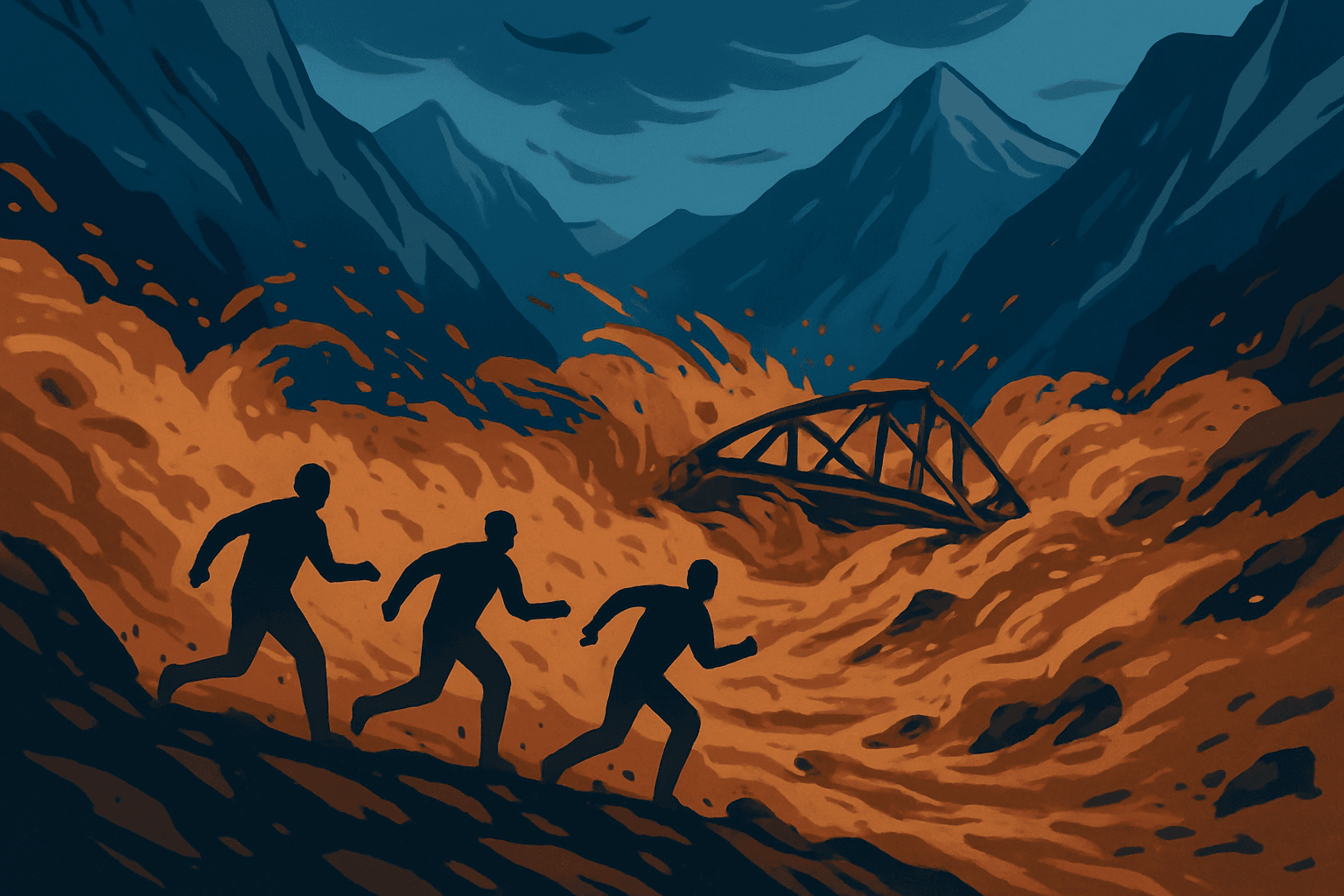
A natural disaster of staggering scale is unfolding in the Himalayas right now — and the images coming out are absolutely devastating.
At least 95 people are confirmed dead and hundreds more are missing after catastrophic flash floods tore through the border region between Nepal and Tibet in China. Nearly 400 tourists, including visitors from the US, UK, India and Malaysia, are among those unaccounted for.
And officials are warning it could get much, much worse.
What Happened
According to The Guardian, the disaster was triggered when a massive torrent of mud, water and debris burst from the banks of a river that runs between China and Nepal on Tuesday.
The flash floods are believed to have been caused by an ice-rock avalanche from a glacier that created a sudden downstream surge on the Lhende Khola river, a tributary of the Bhote Koshi.
Entire villages have been swept away. Homes, roads, bridges, power plants — all gone in minutes.
BBC News has shared distressing footage showing the sheer scale of the destruction: bridges being torn apart by raging floodwaters, people running for cover, and settlements completely engulfed by water, mud and debris.
"There is devastation everywhere we look," Tula Bahadur BK, a health worker in the affected Rasuwa district, told Reuters. "The settlements next to the river have been completely swept away. Five of my own relatives are missing."
The Search For Survivors
Nepal's tourism board reports that 384 tourists have been reported missing, along with 44 army personnel and 30 police officers.
Most of the missing tourists are believed to be pilgrims from India and the Indian diaspora who were traveling to Mount Kailash in Tibet, a sacred site for Hindus.
At least one Australian has been confirmed among the missing.
Rescue efforts are underway, but helicopters can't land in the hardest-hit areas of Syapru Besi and Timure until the floodwaters recede. Police say they still can't assess the full extent of the damage.
China's President Xi Jinping has urged "all-out" search efforts for the missing, while Nepal's Prime Minister Balendra Shah has ordered people living in lower areas to move to higher ground immediately.
It Could Get Worse
Here's the truly chilling part: officials say the flooding could intensify because the river remains blocked upstream.
Authorities have issued flood alerts for several districts in Nepal, warning residents to stay away from the Bhote Koshi, Trishuli and Narayani rivers.
India has also issued alerts for the states of Bihar and Uttar Pradesh, which border Nepal and sit downstream of the affected rivers.
"There could be heavy casualties or loss of property," said district administrator Narendra Pariyar, urging everyone on the riverbanks to evacuate.
The Climate Connection
This isn't the first time the region has been devastated by flooding. A similar Bhote Koshi flood last year killed nine people and destroyed a "friendship bridge" linking Nepal and China, disrupting trade and transport for months.
And the problem is only getting worse.
The Himalayan region is warming faster than the rest of the world due to the climate crisis, according to The Guardian. Research shows that extreme weather events like heatwaves and torrential rains have become more frequent.
Earlier this year, researchers in Kathmandu found that glaciers across the Hindu Kush region are melting at an accelerating rate — ice loss rates have doubled since 2000.
Which means disasters like this could become the new normal.
The Human Cost
Beyond the death toll and the missing, entire communities have been destroyed. Nepal's energy ministry says electricity supplies have been "significantly affected" due to destroyed hydroelectric plants.
Communication lines are down. Roads are impassable. Families are desperately searching for loved ones.
"The first two video clips have been edited by the BBC with white flashes, due to the distressing content," BBC News warned when sharing footage of the disaster.
That should tell you everything you need to know about how bad this is.
Our hearts go out to everyone affected by this tragedy. The scale of loss is unimaginable.
Sources:
Spill It 💬
0 commentsWhat do YOU think? Drop your hottest take below.
No comments yet 👀
Be the first to spill.