72,000 People Just Tried To Cross Into Europe In 24 Hours — At Least 88 Are Dead
A social media hoax turned a tiny Spanish territory into the site of one of the deadliest mass border crossings in years. Now everyone's asking: who let it happen?
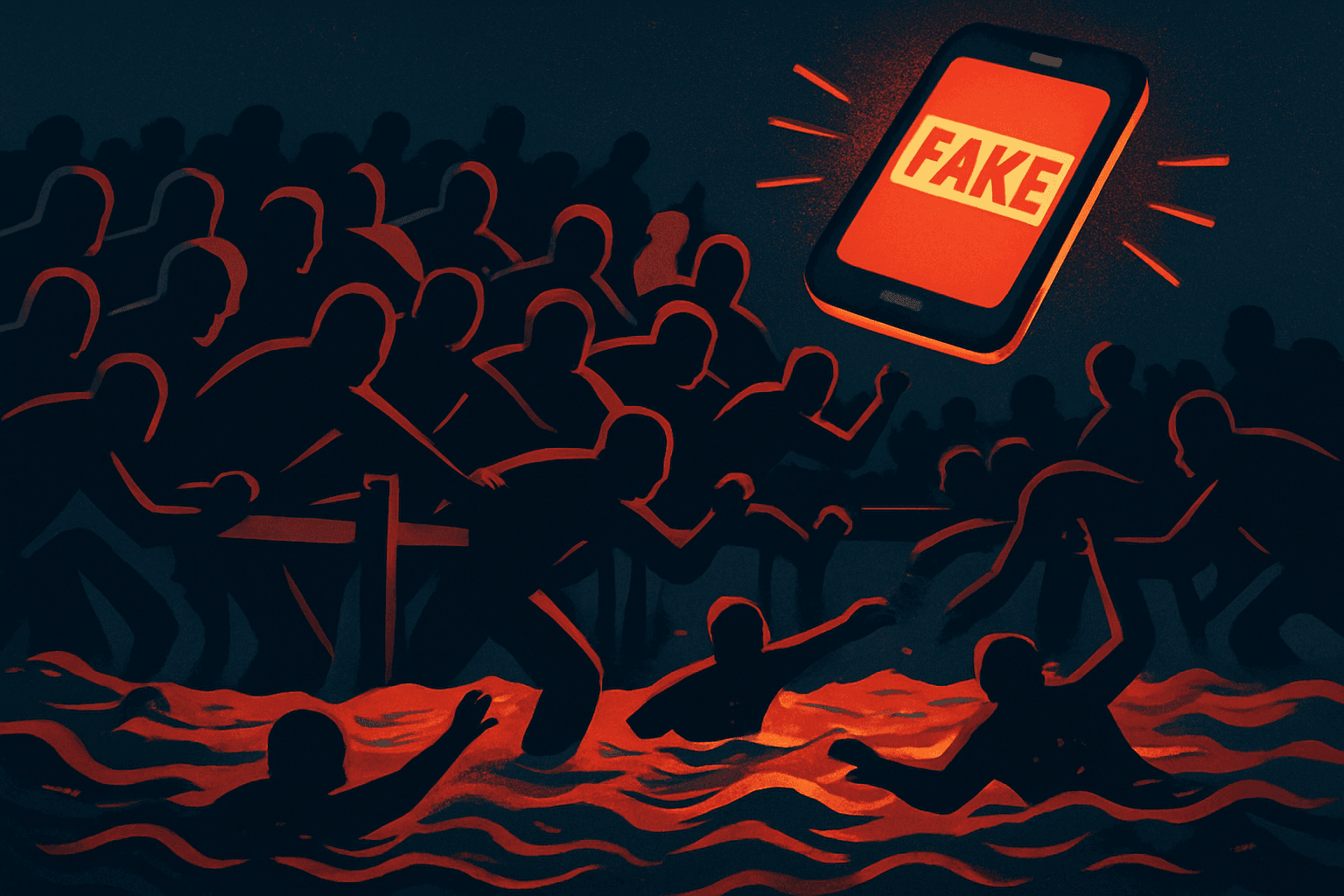
Last week, an estimated 72,000 people surged across the border into Ceuta, a tiny Spanish territory on the tip of Morocco. Most turned back within 48 hours. At least 88 people died trying to make the crossing.
The scenes were extraordinary: thousands swimming around border fences, wading through the sea, clambering over rocks. Some drowned. Others were crushed in the chaos.
And now, as families in Morocco gather at the border holding photos of missing loved ones, the finger-pointing has begun.
What Actually Happened
Ceuta is one of two Spanish territories in North Africa — a small enclave that sits on Morocco's northern coast and represents one of the EU's only land borders with Africa.
According to The Guardian, the mass crossing appears to have been triggered by a social media hoax. Posts on TikTok, Facebook, and WhatsApp claimed Morocco was opening the border and that Spain couldn't deport people who arrived by sea — a misinterpretation of a recent Spanish court ruling.
Instagram accounts showed people where to swim. TikTok videos mapped out routes. Facebook users tracked coast guard patrols. Then thousands of people — mostly young men looking for work — made the crossing.
"There were so many people in the sea," one person told The Guardian. "Everyone was trying to grab on to you to save themselves, and you were trying to escape and move forward so they wouldn't drag you down or drown you."
Spain worked with Morocco to return an estimated 70,000 people within days. About 2,000 remain in Ceuta, including at least 862 children registered as unaccompanied minors.
The Death Toll Keeps Rising
At least 88 people have died in Ceuta, according to local officials, with another 11 confirmed dead in Morocco. Dozens more are still missing.
Hundreds of people have gathered in the Moroccan town of Fnideq near the border, desperately showing photos of loved ones to anyone passing through.
"I have just one son," Hadijja, who travelled from Tangier, told The Guardian. "I haven't had any news of him; he's not answering his mobile phone. This is a tragedy."
Spanish police have set up a missing persons office in Ceuta. NGOs are warning that many children who made the crossing are still wandering the streets unprotected.
Morocco Is Facing Serious Questions
Here's where it gets complicated: Morocco's border surveillance essentially vanished as the hoax spread, allowing thousands to cross unchallenged.
Spain's leader of Ceuta didn't mince words. "People felt that this, if not orchestrated, was at least encouraged or permitted by Morocco," Juan Jesús Vivas said, according to The Guardian.
Morocco has denied any role, blaming "misinformation" and saying security forces were overwhelmed by sheer numbers. But analysts aren't buying it.
"At a certain point, the Moroccan law enforcement forces could no longer confront the migrants because the numbers were very large," a senior Moroccan official told AFP — an explanation Spain's migration minister rejected outright.
The Trump Connection
This is where the geopolitics get messy.
Morocco and the Trump administration have what experts are calling a "golden era" of relations. Morocco was the first African nation to join Trump's Board of Peace. Trump recently sent congratulations to Morocco's King Mohammed VI on his 27 years in power.
And just as Spain was dealing with the crisis? Morocco's king announced he'd named a $1 billion highway after Trump.
Some analysts believe Morocco may have let the border crisis unfold to score points with Washington — or to punish Spain for cozying up to Morocco's rival, Algeria.
The Trump administration and VP JD Vance blamed Spain's Socialist government for the influx. At no point did they mention Morocco's possible role, according to The Guardian.
"Morocco feels emboldened, and there is an administration in Washington that is willing to back it up," Riccardo Fabiani of the International Crisis Group told The Guardian. "I don't think Europe is ready for what comes next because it could get much more complicated."
What Happens Next
EU interior ministers held an emergency meeting this week, insisting the Schengen free-movement zone was never at risk. But the political damage is done.
Right-wing voices across Europe seized on images of the crossing to push for harder borders. In the US, Trump warned that electing Democrats would make "what happened in Spain look small-time."
The bigger issue, according to migration experts: Europe's strategy of paying countries like Morocco to police its borders has made it vulnerable. When those countries decide to look the other way — for whatever reason — chaos follows.
And with families still searching for missing loved ones, and questions swirling about who knew what and when, this story is far from over.
Sources:
- The Guardian: 'Morocco feels emboldened': Trump's influence in spotlight after Ceuta disaster
- The Guardian: Hundreds in Morocco gather near Ceuta border in anxious wait for missing loved ones
- The Guardian: How misinformation and a hardened immigration policy turned Ceuta into Europe's latest flashpoint
Spill It 💬
0 commentsWhat do YOU think? Drop your hottest take below.
No comments yet 👀
Be the first to spill.